BizChina
- Details
- By David Cao
- Hits: 991
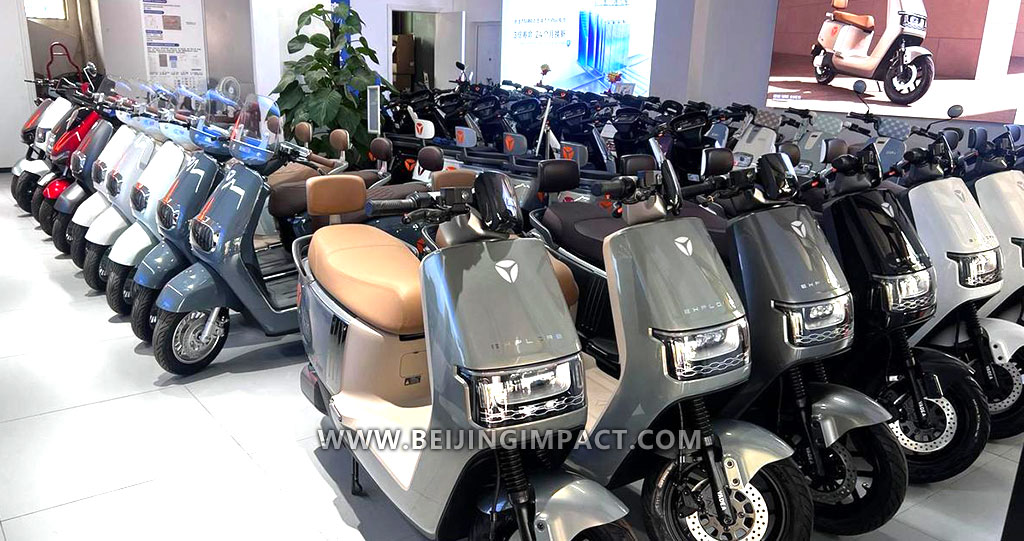
Yadea E10 with Bluetooth Lock
Chinese electric motorcycle maker Yadea Technology Group has further expanded its production line in Tianjin, to support its ambitious "go global" plan of exporting its new energy vehicles to more overseas markets, a senior executive of the company said.
The Wuxi, Jiangsu province-based company completed expanding and started operations of the second phase of its production line in Tianjin in November.
- Details
- By David Cao
- Hits: 886
China's latest push to boost consumption — a top priority on the country's policy agenda for the year ahead — is expected to shore up consumer confidence, unleash domestic demand potential and inject strong momentum into high-quality economic growth, said government officials and experts.
Their comments came as the General Office of the Communist Party of China Central Committee and the General Office of the State Council, China's Cabinet, issued a special action plan on Sunday to vigorously boost consumption, stimulate domestic demand across the board and increase purchasing power by raising salaries and strengthening employment support.
- Details
- By David Cao
- Hits: 1019

Chinese automakers Dongfeng Automobile and Changan Automobile announced on Sunday night restructuring plans of their controlling shareholders, both of which are centrally administered state-owned enterprises (SOEs).
Dongfeng Automobile said in a filing that its indirect controlling shareholder Dongfeng Motor Corp is planning a restructuring with other central SOEs, which could result in a change in its indirect controlling shareholder, without affecting its actual controller.
Read more: Are Chinese carmakers Dongfeng and Changan about to merge?
- Details
- By David Cao
- Hits: 988

In early February 2025, China’s State Administration for Market Regulation (SAMR, China's top market regulator) announced an antitrust investigation into Google, marking the latest escalation in the U.S.-China trade and technology rivalry. The probe, initiated amid retaliatory tariffs on U.S. goods, underscores China’s strategic use of regulatory tools to counterbalance geopolitical pressures. This report synthesizes media coverage of the probe, Google’s historical tensions with China, and the broader implications for global tech competition.
- Details
- By David Cao
- Hits: 988

The shipments of artificial intelligence-powered smartphones across the globe are expected to rise by 73.1 percent year-on-year in 2025, according to a report from global market consultancy IDC.
The triple-digit growth in 2024 will be followed by four consecutive years of double-digit growth as handset manufacturers look to incorporate generative AI features across their device offerings, the consultancy said.
Read more: Smartphone shipments forecast to rise by 73.1% in 2025
More Articles …
Page 7 of 126