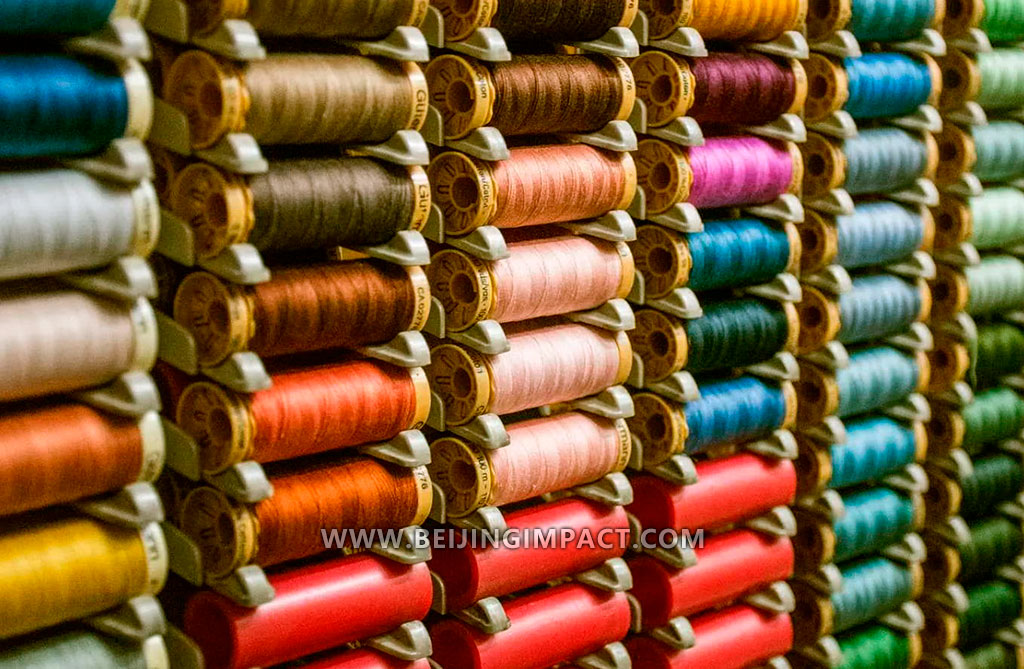
In 2024, China's light industry demonstrated remarkable resilience and innovation, maintaining its position as the world's largest producer and exporter of consumer goods. With 136,600 enterprisesoperating in the sector—a 5.89% annual growth rate since 2020—the industry contributed 7.93 trillion yuan, sustaining China's dominance in global markets .
Intelligent Transformation: Redefining Efficiency and Quality
The sector's evolution is epitomized by smart manufacturing advancements. At Haier's interconnected refrigerator factory in Qingdao, AI-driven systems orchestrate production lines, assembling a new refrigerator every 10 seconds. Robotic arms and 5G-enabled industrial internet optimize component placement, while AI-powered visual positioning replaces manual labeling, achieving near-zero defect rates. This transformation has doubled production capacity compared to traditional factories, yielding 5,000 premium refrigerators dailyfor global markets .By 2024, five Haier facilitiesearned national-level "excellence" smart factory certifications, spanning appliances like refrigerators and washing machines. Such innovations reflect a broader trend: 13% of China's 1,260 national 5G-enabled factoriesbelong to the light industry, with over 60% of large-scale enterprises adopting industrial internet solutions .
Green Development: Sustainability at Core
Environmental stewardship is central to China's industrial strategy. As of 2024, 1,321 light industry enterpriseshave earned national green factory certifications, covering sectors from home appliances to battery production. This aligns with the "14th Five-Year Plan" (2021–2025) goal to reduce carbon footprints through circular economy practices and renewable energy integration .
Innovation-Driven Competitiveness
R&D investments have propelled breakthroughs. Industry-wide R&D intensity rose from 1.72% in 2020 to 2.31% in 2023, with valid invention patents surging by 12.3% annuallyto 214,000. Companies like Angel Yeast (Hubei) exemplify this shift, leveraging biotechnology to diversify products—from food additives to plant-based proteins, enhancing value-added outputs .The home appliance sector exemplifies this growth. Smart appliances now dominate 62% of the market(up from 38% in 2020), driving sector revenue to 1.95 trillion yuanin 2024—a 31.6% increase since 2020 .
Global Market Expansion
China's light industry exports now account for 25.9% of national total exports, retaining the top spot for five consecutive years. Emerging markets in the Belt and Road region absorbed 33% of exports(up from 30% in 2020), while ASEAN markets grew to 15%, diversifying trade dependencies .
Future Vision: 2030 Targets
By 2030, China aims to:
Boost light industry revenue to over 30 trillion yuan(average annual growth ≥5%).
Establish 300+ national key labs/engineering centers.
Cultivate 10 global brandsand 50 regional brands, reinforcing global market leadership .
Conclusion
Through smart manufacturing, green innovation, and strategic market diversification, China's light industry is not only meeting domestic demand but also setting benchmarks for global industrial transformation. As Zhang Chonghe, president of the China National Light Industry Council, emphasized: "Innovation and collaboration are propelling us toward the high end of the value chain."